The structureitself absorbsthe impact
SPRUT · N is a modular, movable, spatially reconfigurable system for dynamic absorption of high distributed energies, built around a slider-and-guy-cable corset with elastic damping units.
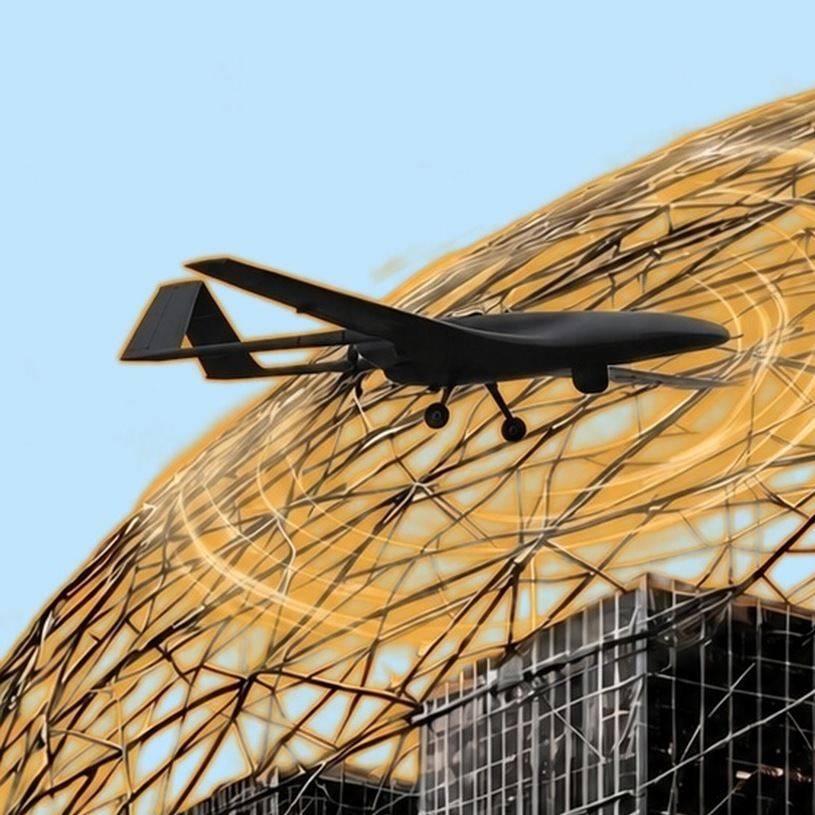
Blast energy is absorbed elastically
SPRUT is a static-dynamic passive protection system that shields facilities from high-energy kinetic, blast-wave and fragmentation effects. Airborne ballistic, cruise and guided threats meet an elastic protective layer that distributes and dissipates the impact energy throughout the entire system — the first outer layer absorbs 65–70% of it.
Interception
The threat is caught by the outer layer, set at least 4.5 m away from the protected facility.
Containment
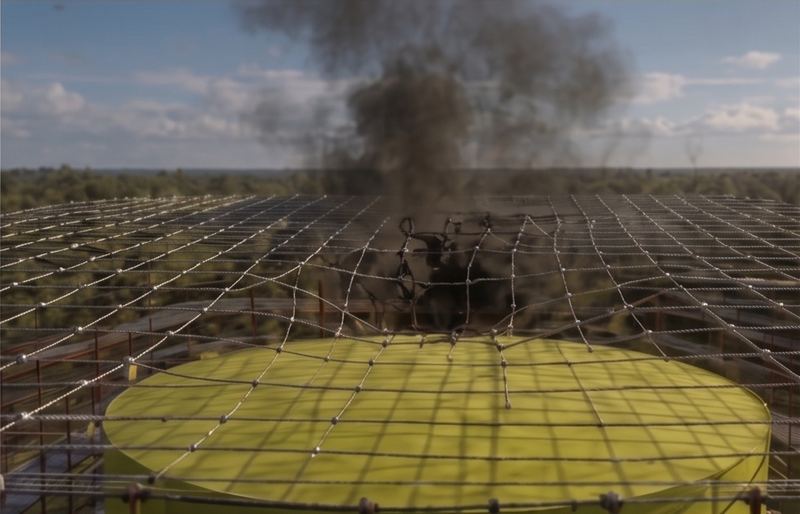
The threat is held on the first sacrificial layer, away from the protected facility — its fuze detonates in empty space.
Damping
Cascading elastic absorption of the impact and the air blast wave by the whole spatial system acting as one.
What SPRUT protects against
Reliable interception, capture, containment and dynamic damping of airborne ballistic, cruise and guided threats — total impact energy of up to 186 MPa is absorbed elastically, with no penetration through the barrier.
Heavy long-range UAVs
Expendable high-speed fixed-wing vehicles with carbon-fibre or fibreglass airframes.
Super-heavy strike UAVs
Next-generation heavier fixed-wing vehicles with all-metal airframes.
Tactical cruise missiles
Long-range subsonic air-launched cruise missiles attacking from various angles.
Impact energy becomes work done by the whole system
The core principle is elastic damping. The structure does not resist the impact rigidly: it catches, stretches and absorbs — in a cascade, layer by layer.
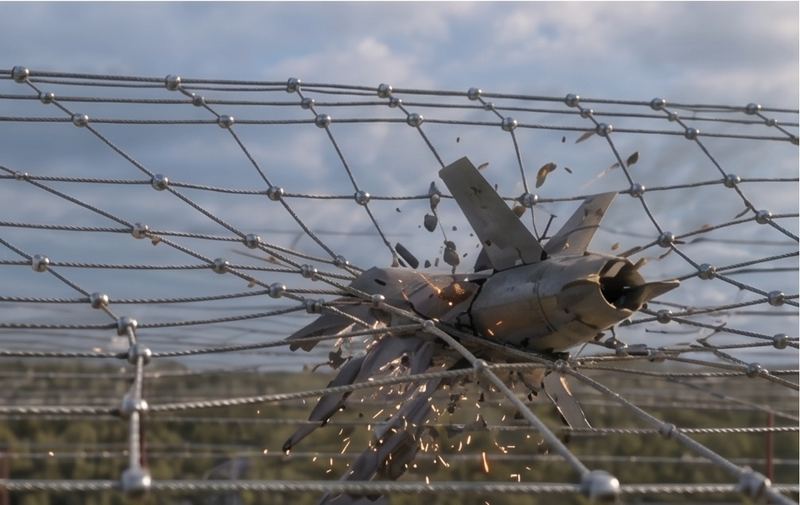
Contact at the outer line
The threat meets the outer sacrificial layer — a stainless-steel cable net with a binding seam, at least 5 m from the equipment.
Sliding with the impact vector
The structure moves with the impact instead of meeting it rigidly, redirecting the momentum into the slider units.
Damping units at work
Elastic tension damping units take up the bulk of the impact’s kinetic energy.
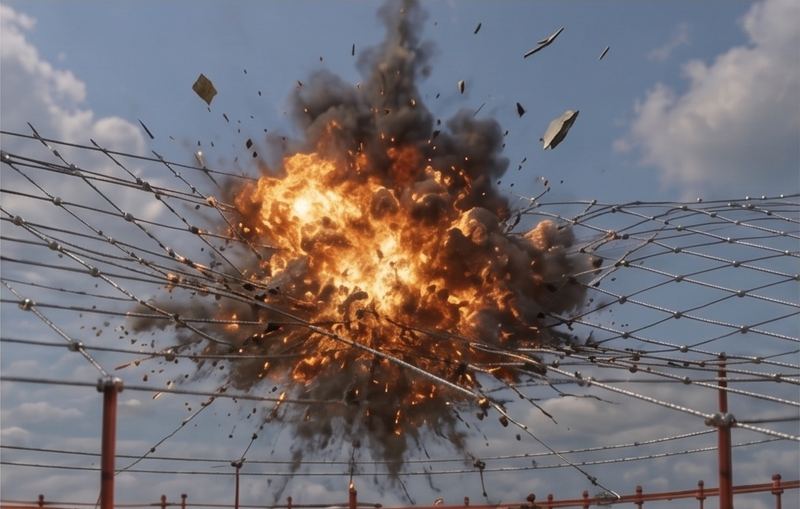
Wave dissipation in the system
Residual overpressure passing the sacrificial layer is absorbed by the following layers in a cascade.
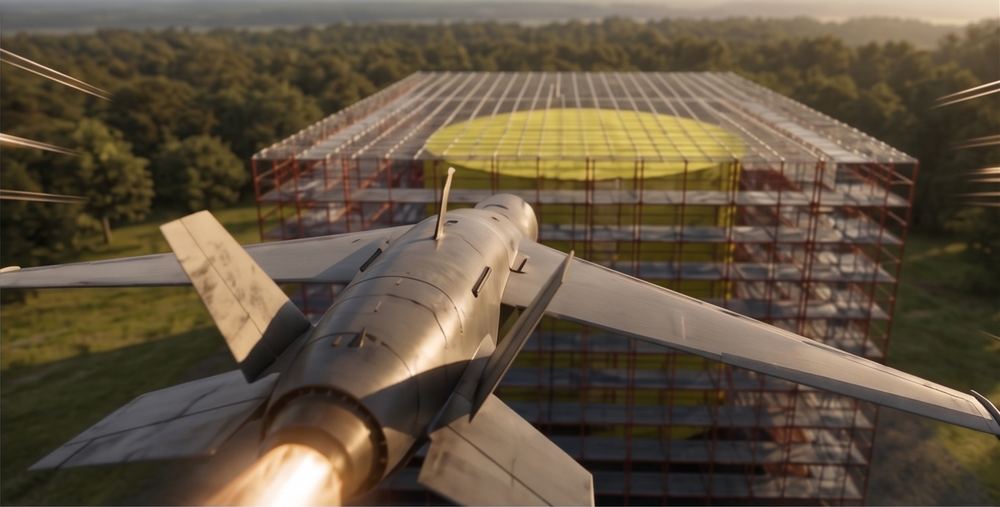
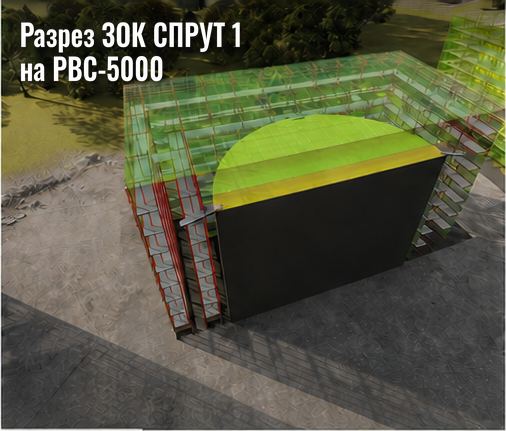
SPRUT protective enclosure on an RVS-5000 tank
A subsonic cruise missile with a 450 kg explosive warhead strikes the tank’s protective enclosure — from approach to containment on the outer layer.
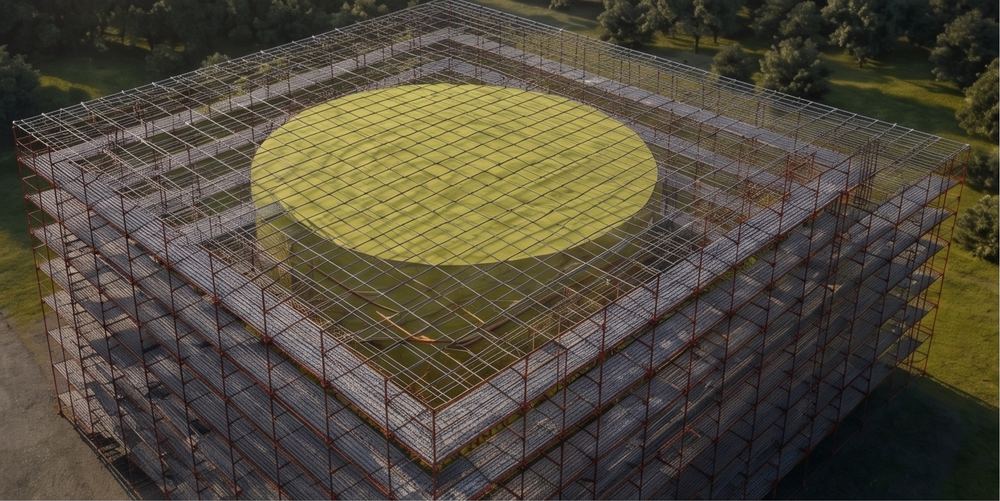
Two configurations for different facility types
All engineering solutions are the developer’s intellectual property. Rigging and damping attachments are not shown in the 3D model.
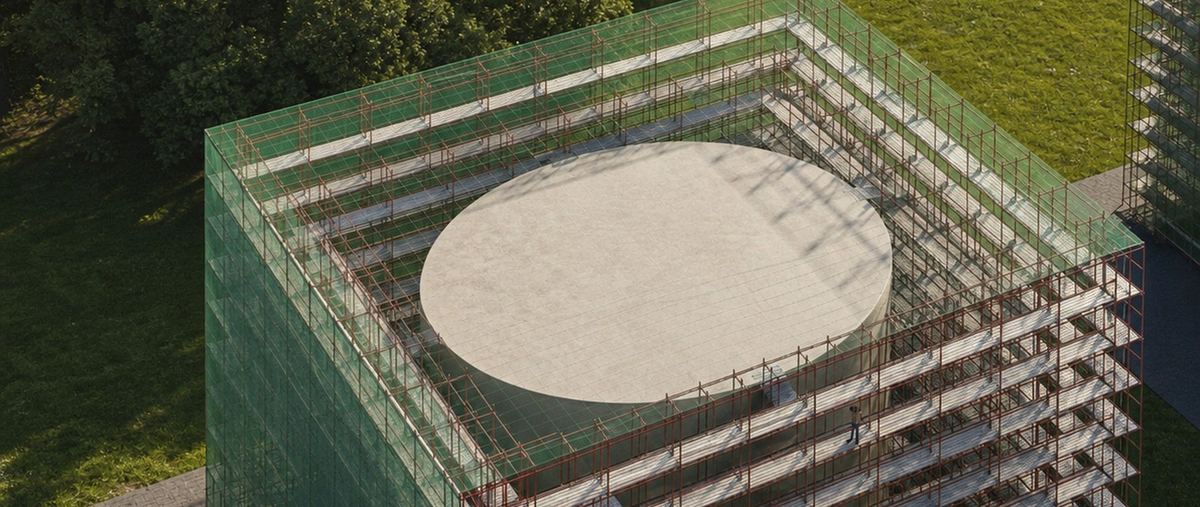
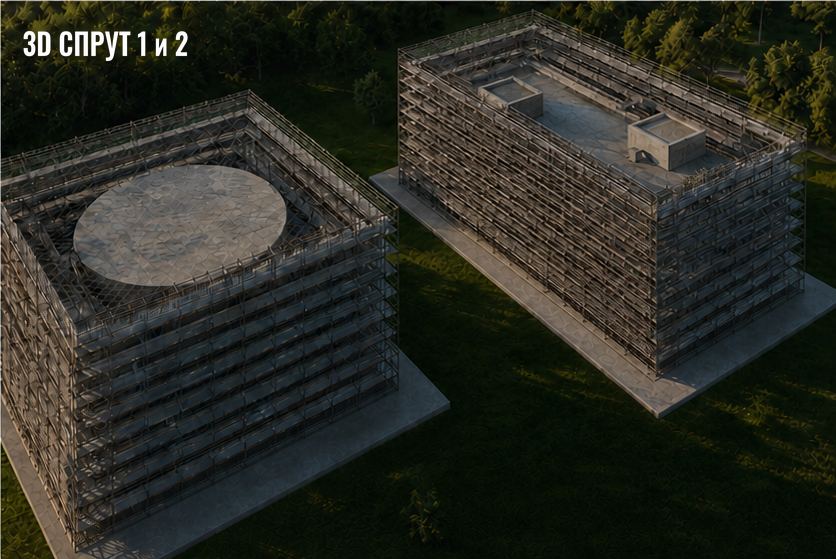
SPRUT 1
energy-sector tank farmsProtection for tank farms, pipelines, storage vessels for all types of gas, fuel stations and other fuel-and-energy facilities.
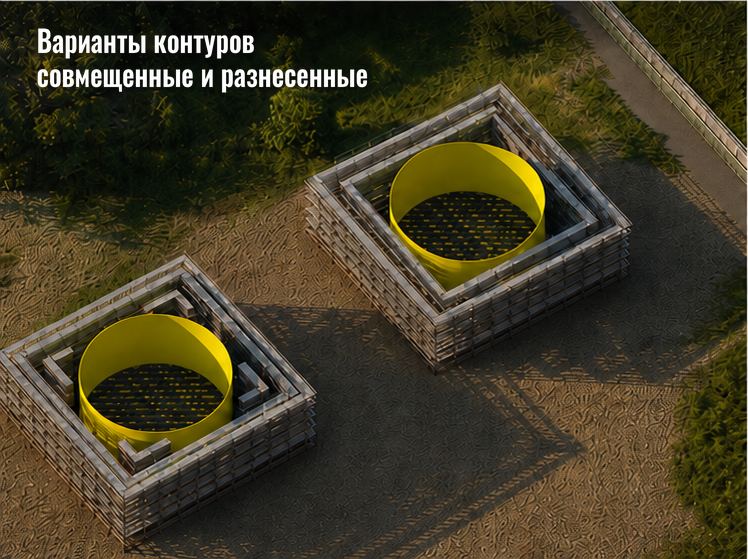
- Free-standing tubular frame around the tank, galvanised steel up to 40 m high
- Load-bearing stainless-steel guy cables ≥ Ø 12 mm, cable net ≥ Ø 8 mm, 50×50 mm mesh
- Installed without welding or hot work in the explosion-hazard zone
- Foundations: screw piles, reinforced-concrete pads, dowel anchors
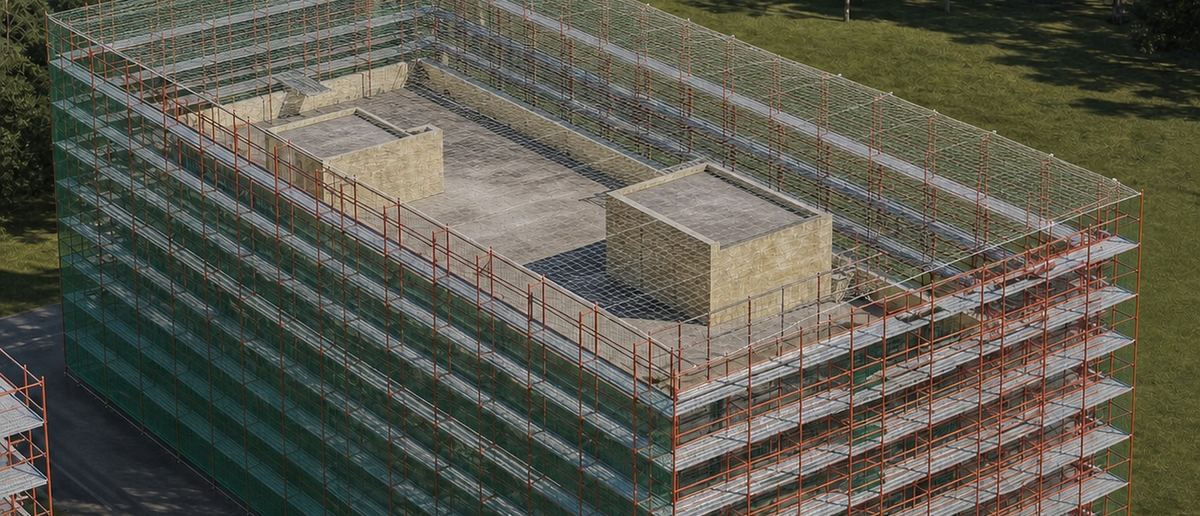
SPRUT 2
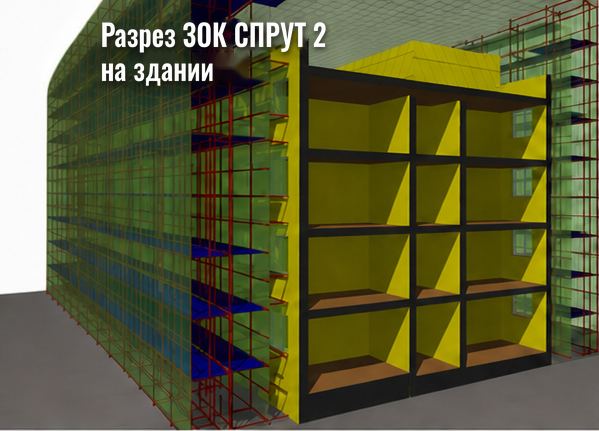
buildings · sites · bridgesProtection for buildings, open sites, logistics centres, bridges and civil infrastructure, anchored to walls and roofs.
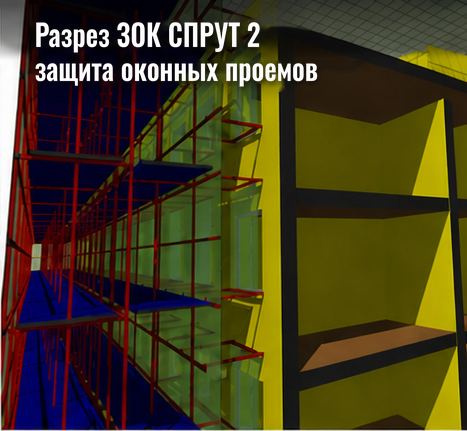
- Wall units: chemical anchors, sliders, compression-tension damping units
- Roof tiers: lower ≥ 2.0 m · upper ≥ 5.5 m
- Window shields: 14 mm polycarbonate, 506.25 J impulse, dent ≤ 6 mm
- Additional layers mounted on existing nodes without dismantling the base
Layer scalability 1 → 4+
Technical interfaces are built in from the first stage. The protection class is raised by adding guy cables, ties and dampers to the existing frame, without dismantling the base.
Why SPRUT
Modularity
layers can be added without dismantling the load-bearing baseFast installation
dry assembly: sleeves, clamps, turnbuckles — no weldingClassified as a temporary building or structure
Minimal cost to repair damaged elements
Performance can be multiplied on already-built systems
* as the combat capabilities of aerial vehicles growWe will calculate a configuration for your facility
Protection level, number of layers, foundation type and rigging are determined by calculation — based on the actual threat model and the facility’s geometry. Our specialists visit the site.